
Apartment move-in costs in Austin: deposit, fees and first month explained
By Ross Quade · Updated 2026-06-26
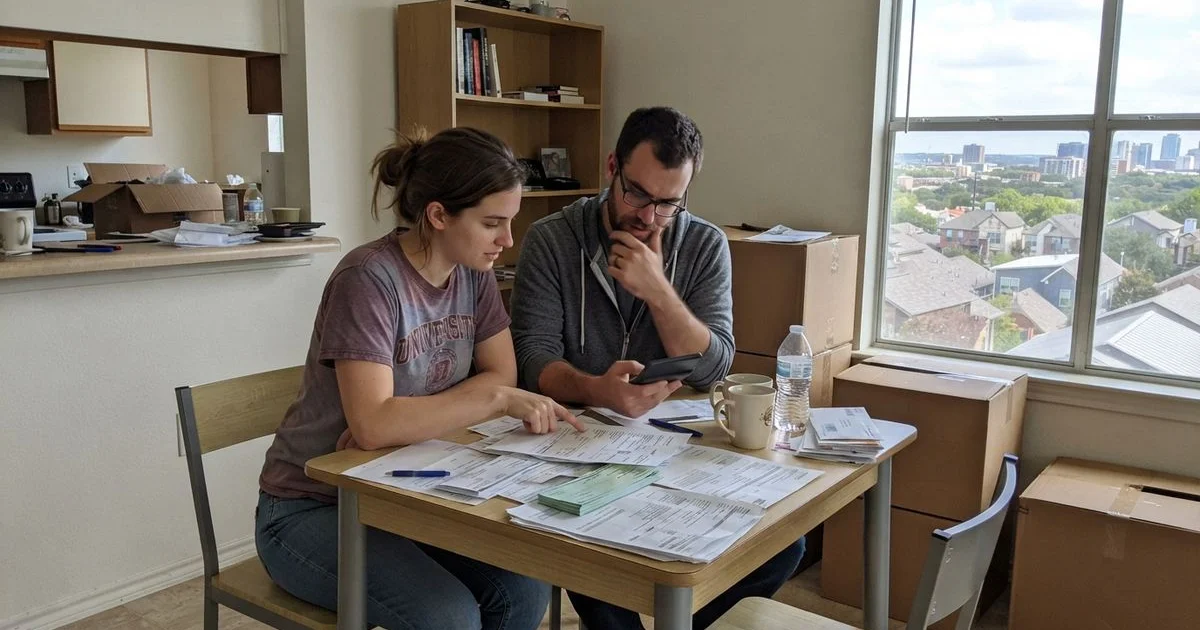
The number on an apartment listing is never the number you need in hand on move-in day. Between the deposit, application fees, an administrative fee, and the first month’s rent, the real cash requirement to move into an Austin apartment usually runs well above a single month’s rent. Knowing the full breakdown ahead of time keeps move-in day from being a financial surprise. For the base rent side of the equation, see our guide on what apartment rent really costs in Greater Austin.
What actually makes up your move-in total
- Security deposit. Refundable, assuming no damage beyond normal wear and tear, and typically the largest single line item.
- Application fee. Non-refundable, charged per adult applicant, covering the credit and background check.
- Administrative or amenity fee. A one-time, usually non-refundable fee charged at signing, separate from the deposit.
- First month’s rent. Due at signing or move-in, depending on the property.
- Pet fee or deposit. If bringing a pet, expect an added deposit and sometimes ongoing monthly pet rent on top.
Typical move-in cost ranges by community type
The table below shows a typical total move-in cost range (deposit, admin fees and first month’s rent combined, before any pet costs) for a $1,600 monthly rent, which is a reasonable mid-range starting point for the Austin metro.
| Community type | Typical total move-in cost |
|---|---|
| Standard community, no pet | $2,650 - $3,100 |
| Standard community, with a cat | $2,950 - $3,400 |
| Standard community, with a dog | $3,050 - $3,500 |
| Luxury or high-rise community, no pet | $3,700 - $4,350 |
| Luxury or high-rise community, with a dog | $4,150 - $4,750 |
These ranges scale directly with your actual monthly rent, so a $1,200/month unit will run proportionally lower and a $2,200/month unit proportionally higher.

Where the numbers can move
Your credit and rental history are the biggest variable. Applicants with strong credit and a clean rental history often qualify for a standard deposit, while applicants with thinner credit or a prior eviction may be offered a higher deposit, an additional non-refundable fee, or a co-signer requirement instead of being denied outright. Ask the leasing office directly what triggers each outcome before you apply, since a declined application still typically costs you the application fee.
Budgeting before you start touring
A useful gut check before you fall in love with a specific floor plan: your total move-in cash requirement plus your first month’s rent should not leave you with less than a small cushion for moving costs (truck rental, movers, deposits for utility setup). Running your expected rent and pet situation through a move-in cost estimate before you tour helps you rule out units that would leave your budget too thin on day one, even if the monthly rent itself looks affordable.
What to ask before you sign
Ask for the full move-in total in writing, not just the deposit and first month, so you know the real number before you commit to a specific unit. Ask whether any fees are refundable under any circumstance, and whether the property offers a payment plan for the move-in total if paying it all at once is a stretch. Some communities do allow the deposit or admin fee to be split across the first two months, but this is not standard and has to be requested.
Deposit alternatives worth knowing about
A growing number of Austin-area communities offer a surety bond or deposit-alternative program, where you pay a smaller, non-refundable fee instead of a full refundable deposit. This lowers your upfront cash need but usually costs more over time than a standard deposit would if nothing ever gets deducted, since you never get that smaller fee back. It can make sense if cash on hand is the binding constraint, but run the actual numbers before assuming it is automatically the cheaper option.
Move-in specials and how they affect the real total
A community advertising “one month free” or a reduced deposit as a move-in special is still charging the same total value over your lease term in most cases; it is a marketing structure more than a genuine discount, though it does lower your immediate cash need at signing. Ask specifically how the special affects your effective monthly rent over the full lease term, not just what it does to the number due on day one.
Our methodology explains how we score and vet the communities in this directory, and Austin Apartment Reviews Guide tracks pricing and reviews across every category in Greater Austin, which is worth checking before you commit your move-in budget to a specific property.
Frequently asked questions
- How much cash should I have ready to move into an Austin apartment?
- As a starting point, plan on roughly 1.75x to 2x your monthly rent to cover the security deposit, application and admin fees, and first month's rent combined, plus an added few hundred dollars if you have a pet.
- Is the security deposit usually equal to one month's rent?
- It varies. Many Austin-area communities charge a deposit close to one month's rent for applicants with strong credit, but some charge less, more, or use a smaller deposit plus a non-refundable fee depending on your application results.
- Do luxury apartments have higher move-in costs?
- Generally yes. Higher-end and high-rise communities often charge higher administrative fees and sometimes a larger deposit relative to rent than standard garden-style communities.
- Can I negotiate move-in fees?
- Sometimes, especially administrative or amenity fees, particularly during slower leasing months. It rarely hurts to ask directly whether any fees are waivable or reducible before signing.