
A first apartment guide for students and young renters in Austin
By Ross Quade · Updated 2026-06-16
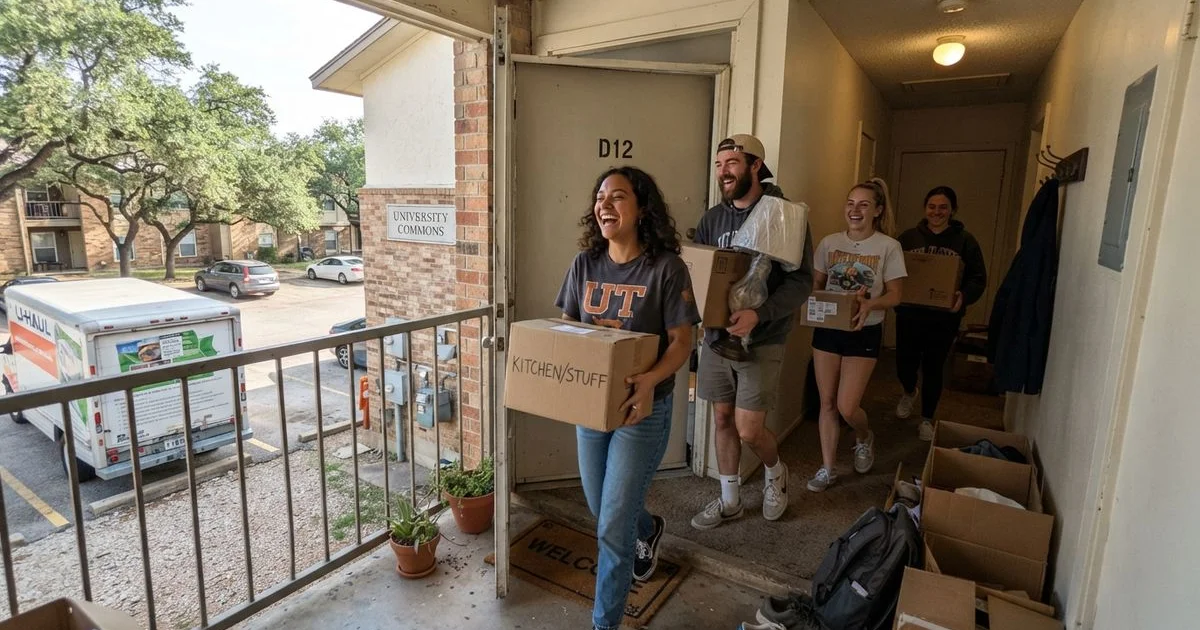
Signing your first apartment lease comes with a learning curve most people only figure out after already making a mistake once: an underestimated budget, a roommate situation that turns messy, or a lease clause nobody explained. Here is what first-time renters and students in the Austin area should know before signing, whether you are looking at our student housing listings near campus or a standard community elsewhere in the metro. If you are timing this around a fall move-in, our guide on apartment hunting before the school year covers when to actually start looking.
Building a realistic budget
Rent is only the starting number. Add in utilities, internet, renter’s insurance, and a portion of any shared costs with roommates before deciding what you can actually afford. A widely used guideline is keeping rent at or under roughly 30% of gross monthly income, and running your actual numbers, including any co-signer’s support, through a rent budget calculator before you start touring saves you from falling for a unit that stretches your budget too thin once utilities and fees are added.
Applying with limited credit history
Most first-time renters have thin or no credit history, which can make standard income-based approval harder. The two most common paths around this are a co-signer (usually a parent, who agrees to be responsible for the lease if you cannot pay) or a larger security deposit in place of a credit-based approval. Ask the leasing office directly which option they offer before assuming you will be denied outright.
Roommates: shared lease vs. by-the-bed
| Lease type | How it works | Best for |
|---|---|---|
| Standard shared lease | All roommates named on one lease, jointly responsible for full rent | Roommates who know and trust each other well |
| By-the-bed lease | Each roommate signs individually for their own bedroom’s rent | Students, especially near campus, wanting individual financial responsibility |
A shared lease typically makes every roommate jointly and severally liable, meaning you could be on the hook for a roommate’s unpaid share. A by-the-bed lease avoids this by keeping each person’s financial responsibility separate, which is worth asking about specifically if you are renting with people you do not know well.
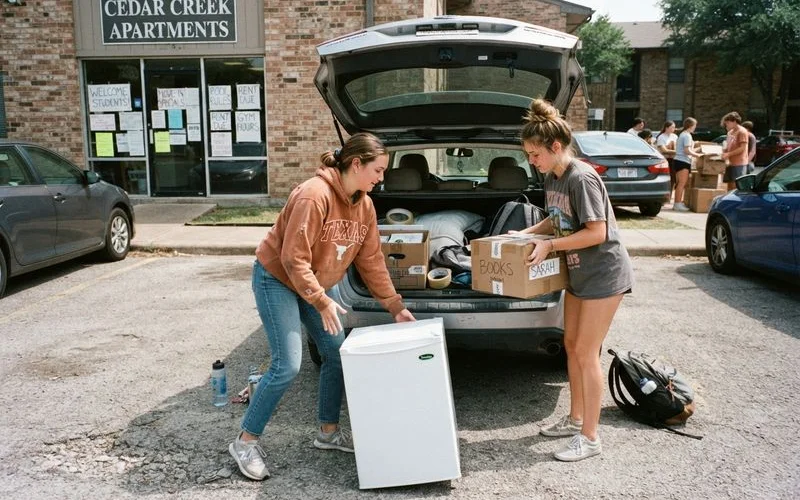
Questions to ask before signing with roommates
Even with a good friend, put a written roommate agreement in place covering how shared costs (utilities, internet, shared groceries) are split, what happens if someone wants to move out early, and how security deposit refunds will be divided at the end of the lease. This is separate from the lease itself and protects the relationship as much as the money.
Things first-time renters commonly miss
- Renter’s insurance, often required and inexpensive, but easy to forget until move-in day.
- Utility setup timing, since some providers require a few days’ lead time to activate service.
- The move-in inspection, documenting existing damage in writing and with photos, which protects your deposit at move-out.
- The actual notice period for lease renewal or move-out, often 60 days before lease end, which is easy to miss if you are not tracking your lease anniversary.
Reading the lease itself, not just the highlights
The leasing agent will walk you through the basics, but the details that matter later are usually in sections nobody reads out loud: how rent increases at renewal, what the notice period is for entry, and what happens if you need to break the lease early for a transfer, a program change, or a family emergency. It takes twenty extra minutes to read the full lease before signing, and it is the cheapest insurance available against a bad surprise nine months in. If anything is unclear, ask the leasing office to explain it in plain language before you sign, not after.
Setting expectations with your co-signer
If a parent or guardian is co-signing, have a direct conversation up front about what that actually means: they are agreeing to cover the full lease obligation if you cannot, not just vouching for your character. Being clear about this, and about how you plan to handle rent if your income situation changes mid-lease, avoids an awkward conversation later and helps everyone start the arrangement on the same page.
Getting comfortable before you sign
Our methodology explains how we score and vet the communities in this directory, and Austin Apartment Reviews Guide covers pricing and reviews across every category in Greater Austin, worth a look before you commit to your first lease anywhere in the metro.
Frequently asked questions
- Can I rent an apartment in Austin with no credit history?
- Yes, but you will likely need a co-signer (often a parent) or a larger deposit, since limited credit history makes standard income-based approval harder. Ask the leasing office directly what their policy is for applicants with no credit file.
- Should students near UT Austin get a lease with roommates or lease by the bed?
- A by-the-bed lease, common near campus, makes each roommate individually responsible for their own bedroom's rent rather than the whole unit. This limits your financial exposure if a roommate stops paying, compared to a standard shared lease.
- What is a reasonable budget for a first apartment as a student?
- A common guideline is keeping rent at or under about 30% of your gross income, or, for students without steady income, a rent your co-signer can comfortably support alongside their own obligations.
- Do I need renter's insurance for my first apartment?
- Many Austin-area leases require it, and even where it is not required, it is inexpensive relative to the protection it provides for your belongings and personal liability.