
Noise and thin walls: how to avoid a loud apartment in Austin
By Ross Quade · Updated 2026-06-30

Noise is one of the most consistent complaints in Austin apartment reviews, showing up almost as often as maintenance speed. It rarely means a property is badly run; it usually comes down to construction type and where in the building a specific unit sits. The good news is that noise exposure is largely predictable if you know what to ask before you sign.
Why construction type matters more than you would think
Most garden-style and mid-rise apartment communities in the Austin area use wood-frame construction, which transmits impact noise (footsteps, dropped objects, furniture moving) and airborne noise (voices, TVs) between floors and adjoining units more than concrete or steel-frame high-rise buildings do. This is not a defect; it is standard construction for this building type across the market. It does mean unit placement within the building matters as much as the building itself.
Where noise comes from, and how to avoid it
| Noise source | What causes it | How to reduce exposure |
|---|---|---|
| Upstairs neighbors | Footsteps, furniture, dropped items transmitted through the floor | Choose a top-floor unit; there is nothing above you |
| Adjoining units | Voices, TV, music through shared walls | Choose a corner unit or a unit with fewer shared walls |
| Breezeways and stairwells | Foot traffic, doors, conversations | Avoid units directly next to a stairwell or breezeway entrance |
| Parking lots and roads | Traffic, car doors, deliveries | Ask for a unit facing away from the main lot or a busy road |
| Amenity areas | Pool, clubhouse or fitness center noise | Ask how far the unit is from shared amenity spaces |
What to ask before you sign, not after
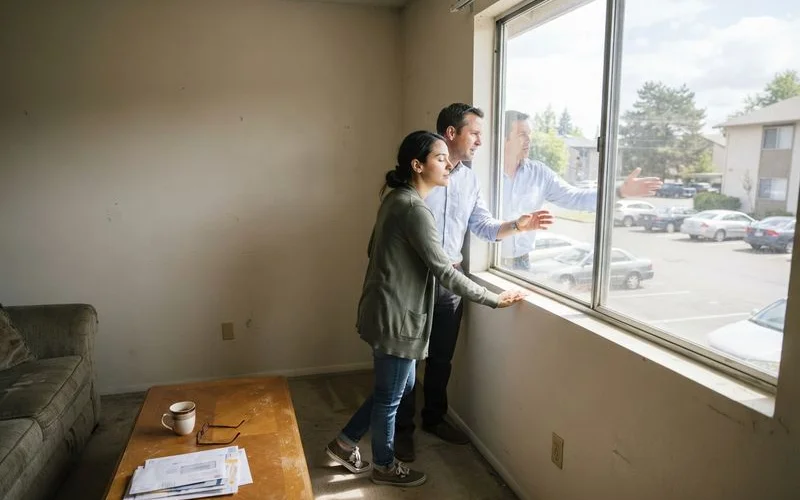
Ask the leasing office directly which specific unit number you would be signing a lease for, not just the floor plan type, and where it sits in the building relative to stairwells, elevators, trash chutes and shared walls. Ask whether the building is wood-frame or concrete construction. If possible, visit the specific unit at a busy time of day (early evening, weekend afternoon) rather than only during a quiet weekday tour, since a unit can sound very different at 7pm than at 10am on a Tuesday. While you are touring at different times of day, it is also worth checking the property’s security basics; our guide on how to tell if an apartment complex is safe covers what to look for.
Reading reviews for noise specifically
Recent reviews mentioning “thin walls,” “noisy neighbors,” or “hear everything” are a stronger signal than the overall star rating alone, since noise complaints tend to be specific and consistent when a building has a real soundproofing issue. A property can have strong ratings overall while still drawing repeated, specific noise complaints about certain unit types or building sections, so read recent reviews for the specific building or unit type you are considering, not just the community as a whole.
If you end up in a noisy unit anyway
Document specific incidents with dates and times and report them to the leasing office in writing, not just verbally. Most leases include a quiet hours clause that management is responsible for enforcing against a disruptive neighbor, separate from ordinary construction noise transmission, which management generally cannot fix after the fact. If the noise is a persistent neighbor issue rather than a building design issue, a documented pattern of complaints gives the leasing office grounds to act.
Simple things that help even in a noise-prone unit
A thick area rug over hard flooring reduces the impact noise you send to the unit below, which is worth doing even if you are the one dealing with noise from above, since it is a reasonable-neighbor gesture that sometimes gets reciprocated. Furniture placed against a shared wall (a bookshelf, a wardrobe) can also modestly dampen sound transfer compared to a bare wall, though it will not solve a serious construction-related issue on its own.
Weighing noise against everything else
No unit is perfectly silent, and a slightly noisier unit with a better price, layout, or location is a reasonable tradeoff for some renters and not for others. Being honest with yourself about how noise-sensitive you actually are, and asking pointed questions during the tour rather than assuming the quietest-looking unit is automatically the right one, leads to fewer regrets than picking based on square footage or finishes alone.
Our methodology explains how we factor recurring sentiment themes like noise into how we score the communities in this directory, and Austin Apartment Reviews Guide is where you can check recent, specific resident feedback before committing to a lease anywhere in Greater Austin.
Frequently asked questions
- Why do so many Austin apartments have noise complaints?
- Construction methods and unit layout have more to do with it than any one property being poorly built. Wood-frame construction, common in mid-size and garden-style communities, transmits sound between units more than concrete or steel-frame high-rises.
- What is the quietest type of unit to look for?
- Top-floor, interior units (not sharing a wall with a breezeway or stairwell) tend to be the quietest, since there is no unit above and fewer shared walls. Corner units can also help, reducing the number of neighbors sharing a wall.
- Can I ask to see a floor plan's exact location in the building before signing?
- Yes, and you should. Ask specifically which unit number you would be signing for and where it sits relative to elevators, trash chutes, stairwells and shared walls, not just the floor plan type.
- What can I do if my unit turns out to be noisy after move-in?
- Document specific incidents (date, time, description) and report them to the leasing office in writing. Many leases include a quiet hours clause the property is supposed to enforce against a noisy neighbor.