
Pet-friendly apartments in Austin: what to check beyond pets allowed
By Ross Quade · Updated 2026-06-22
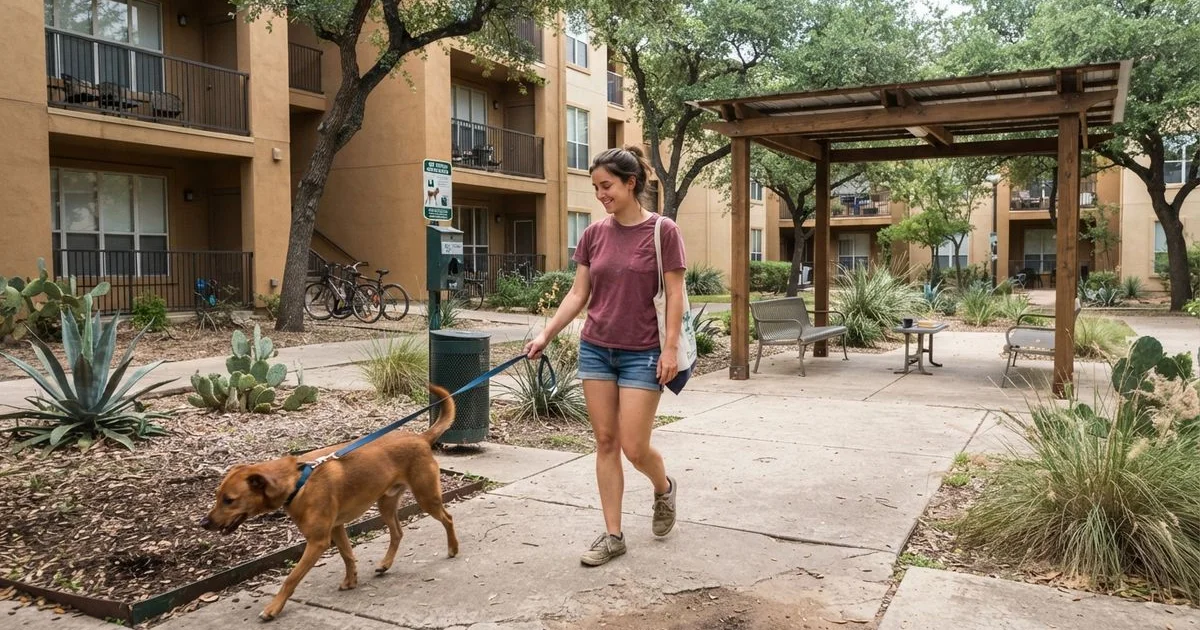
“Pet-friendly” on a listing can mean very different things from one Austin community to the next: it might mean a generous dog park and no breed restrictions, or it might mean a small weight cap, a narrow list of approved breeds, and a monthly pet rent that adds up fast over a lease term. Knowing what to ask before you tour saves you from falling for a property that is not actually a fit for your pet. Our pet-friendly apartment listings across Greater Austin are a good place to start comparing current options.
Start with the policy specifics, not the marketing
Ask for the pet policy in writing, not just a verbal summary, and look specifically for:
- Breed and weight restrictions. These are usually tied to the property’s liability insurance, and they exist at plenty of communities that still market themselves broadly as pet-friendly.
- Pet limit per unit. Most communities cap the number of pets, commonly at two.
- Deposit vs. pet rent. Understand both the one-time cost and the ongoing monthly cost, since pet rent adds up over a full lease term in a way a deposit alone does not.
- Restricted amenity access. Some communities limit which common areas pets can access, or require pets to be leashed at all times outside the unit.
Typical pet costs across Austin-area communities
| Cost type | Typical range |
|---|---|
| Pet deposit (refundable) | $200 - $500 per pet |
| Monthly pet rent | $15 - $35 per pet |
| One-time non-refundable pet fee (some properties, instead of or with a deposit) | $250 - $500 |
Ask specifically which of these apply, since not every property charges all three, and some communities offer a lower-deposit or deposit-alternative option worth asking about directly.
Checking how well the policy is actually enforced
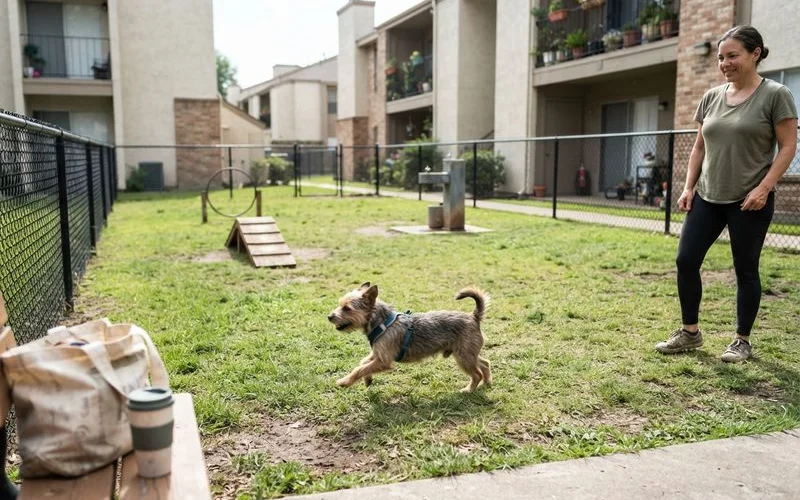
A pet-friendly community with a strong policy on paper is only as good as its enforcement. This is one of the clearer things recent reviews can tell you: look specifically for mentions of unpicked waste in common areas, barking complaints that went unaddressed, or residents skirting weight limits without consequence. A property with a real, working pet policy tends to show up in reviews with specific praise for clean dog parks and consistent enforcement, not just a general “pets allowed” mention.
Questions worth asking on a tour
Ask directly whether the community has breed or weight restrictions, whether there is a dedicated dog park or pet relief area, how waste stations are maintained, and what happens if a resident is found with an unauthorized or over-limit pet. A leasing agent who answers these specifically and confidently is a good early sign; a vague or deflecting answer is worth noting.
Bringing a less common pet
If you have a pet outside the usual cat-or-dog category (a reptile, a larger bird, multiple smaller animals), ask about this directly and in writing before applying, since many standard pet policies are written with only cats and dogs in mind and a mismatch here can come up as a surprise denial late in the application process.
What an emotional support or service animal changes
An emotional support animal or a trained service animal is treated differently under fair housing rules than a standard pet, and breed and weight restrictions generally do not apply in the same way, nor does standard pet rent for a documented service animal. That said, documentation requirements are specific, and communities are within their rights to ask for appropriate verification. Talk to the leasing office directly and early in your search, since this is not something to sort out after you have already signed a standard lease.
Moving in with an existing pet already in the household
If your pet has an established history, house-trained, no bite incidents, no prior eviction related to pet behavior, mention this proactively during your application. Some communities will consider a well-documented track record when a pet falls just outside a stated weight limit, though this is at the property’s discretion and never guaranteed. If the pet fees above are stretching your budget more than the pet policy itself, our guide on free and low-cost renter help in Greater Austin covers income-based and Section 8 options worth checking too.
Our methodology explains how we score and vet every community in this directory, and Austin Apartment Reviews Guide tracks resident sentiment across every category in the metro, which is worth checking before you commit to a lease with a pet in the picture.
Frequently asked questions
- What is the difference between a pet deposit and pet rent?
- A pet deposit is a one-time, typically refundable fee collected upfront to cover potential pet-related damage. Pet rent is a recurring monthly charge on top of your base rent for the life of the lease, and it is generally not refundable.
- Do all pet-friendly apartments in Austin allow any breed or size of dog?
- No. Many communities apply breed or weight restrictions tied to their insurance policy, even while marketing themselves as pet-friendly. Always ask about specific breed and weight limits before touring with a dog in mind.
- How can I tell if a community actually enforces its pet policy well?
- Check recent reviews specifically for mentions of unpicked waste in common areas or unauthorized pets, and ask the leasing office directly how violations are handled, not just what the policy says on paper.
- Are there apartments in Austin with no pet deposit at all?
- Some communities offer lower-deposit or deposit-alternative options, though pet rent or a comparable fee is still common even where the upfront deposit is reduced or waived.